My little slice of peace and wild
Jamie Joseph on assignment: Luangwa Valley, Zambia.
Mission: Solving poverty saves wildlife.
After a week of interviewing transformed ivory poachers in villages right across the Luangwa Valley, travelling on rutted, dusty roads and in unforgiving heat, and getting by on canned beans and warm bottled water, I stumbled upon an oasis of tranquillity, harmony and hot showers!
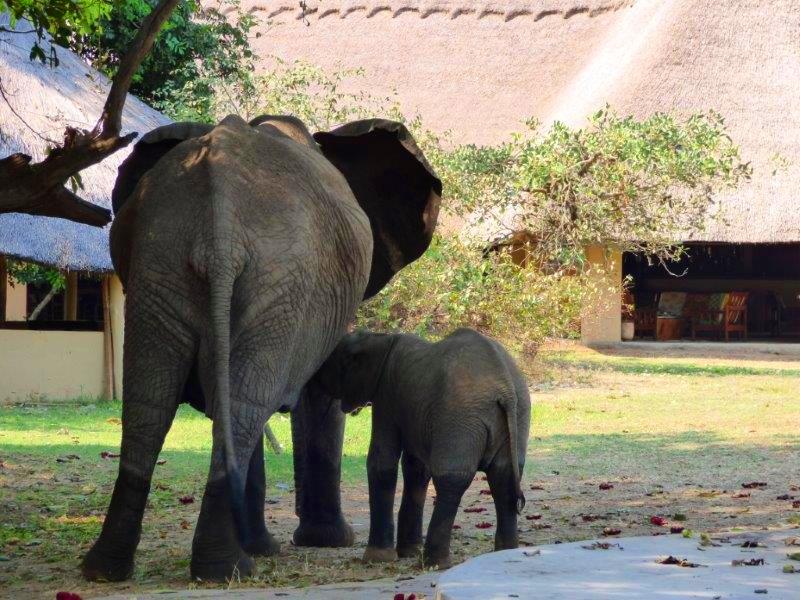
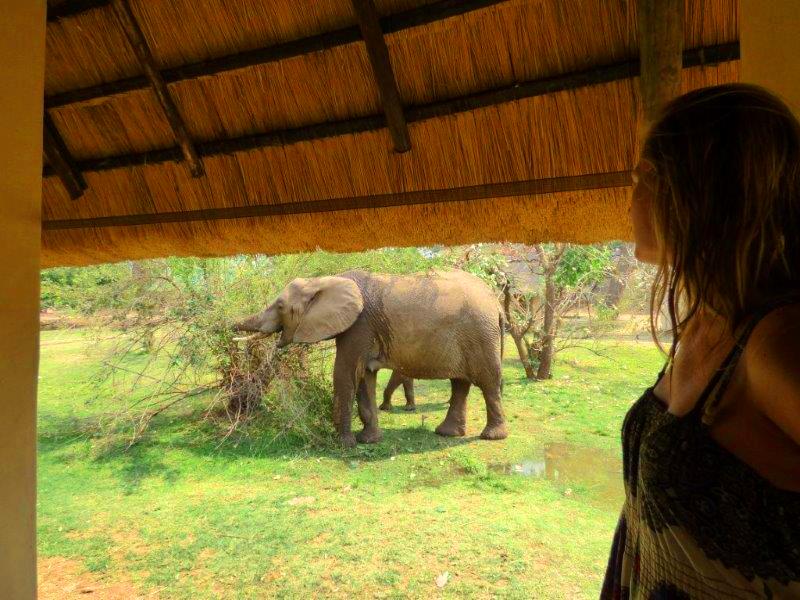
It was dusk when I arrived at Marula Lodge, covered in dirt from head to toe, and I told Cara and Wendy, the lovely hostesses, that I’d be staying for two nights. I just needed to charge my lap top battery and catch up on some urgent work. As I stood under the steaming hot open air shower with a star studded sky above me, I could hear the night come alive with the opening act; the click of insects, and the honking laugh of hippos in the Luangwa River a stone’s throw away. I took one step out of the thatch bathroom adjacent to a huge sausage tree with crimson red flowers in blossom, and there to greet me was a juvenile ele, looking a little surprised, but not at all bothered by my presence. I kept very still and my eyes darted left to right scanning for mum. The remaining family of four sauntered on by, the matriarch stopping briefly to have a sniff of my tent and get a whiff of ‘the new arrival’.
At dinner owners Jenny and Mike filled me in on the various elephant families that visit Marula daily, just as a family of six, including two young babies, strolled past the dinner table. Suddenly one of the babies let out a trumpeting roar of defiance after one of the teenagers gave him a nudge to hurry up.
“I’ll stay for a week,” I blurted out, charmed by the close encounter, a stark contrast to the frantic animals terrorised by poaching in this same land just a decade earlier. Plus, I needed this. I needed a break, to exhale, and recharge my mind and soul. This is my last day before I return to South Africa, just in time for World Rhino Day on 22 September.
I hadn’t budgeted for the US$13 a day camping fee (lovely spacious tents already set up), and there was no way I could afford the US$25 to enter the South Luangwa Valley National Park directly opposite the lodge, but that hasn’t stopped me from experiencing a ‘backyard’ safari. While working fulltime on Africa’s poaching crisis I’ve succumbed to my bush-gypsy lifestyle, but when I get the chance, I thrive on routine.
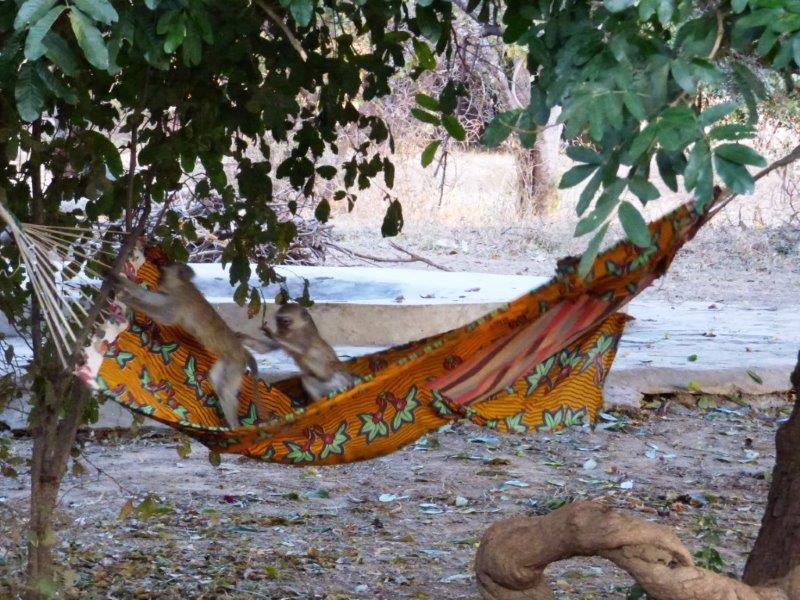
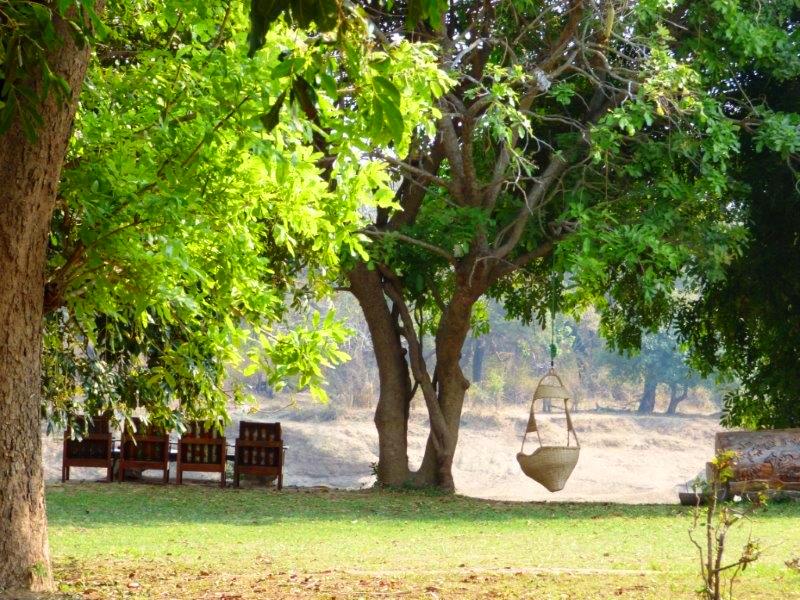
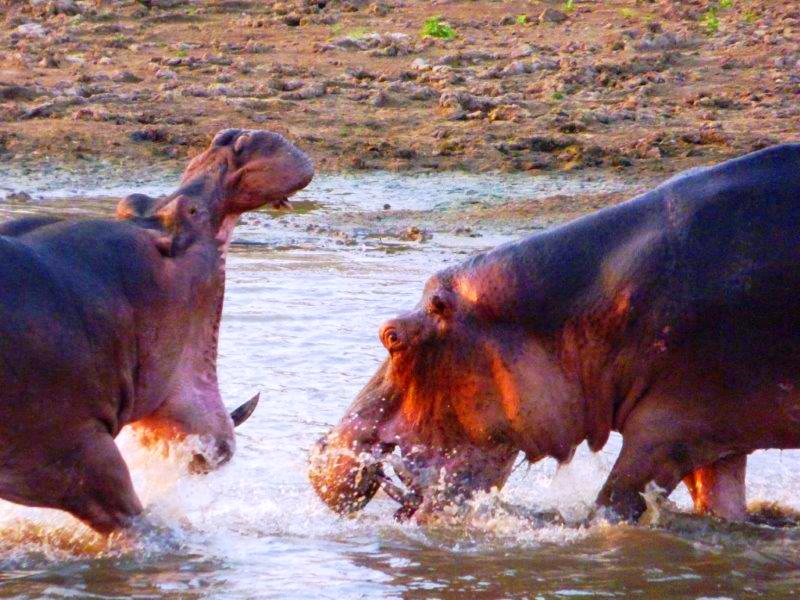
Every morning just before dawn I wake up to birdsong, make myself a cup of tea, curl up on a wood carved seat and watch the sun rise behind the Mopani trees in the east. I can always count on the vervet monkeys for company, who are cheeky enough to swing on the hammock or laze about on the guests viewing deck, but fortunately they still haven’t figured out how to break into tents. The hippos down below are somewhat territorial, and yesterday I witnessed my first hippo brawl; a show and dance of gaping mouths, and a few splashes of smashing teeth. I still haven’t seen leopards or hyenas, but I have heard them.
Before the sun starts to cook and cast a wave of listlessness, I trawl through my content so far gathered for the upcoming web video series, Saving the wild, one human at a time. Thanks to creative agency Augusto, based in Auckland, I can count on brilliant video editors to slice and dice the content all pro bono, but I did promise them that there would be some sort of order when I complete my mission and hand over all the data in December.
By midday it’s up to 38 degrees in the shade; hammock time. Sun squirrels dart between branches and some of my favourite birds swoop through the air; fish eagles, southern carmine bee eaters and long-tailed starlings.
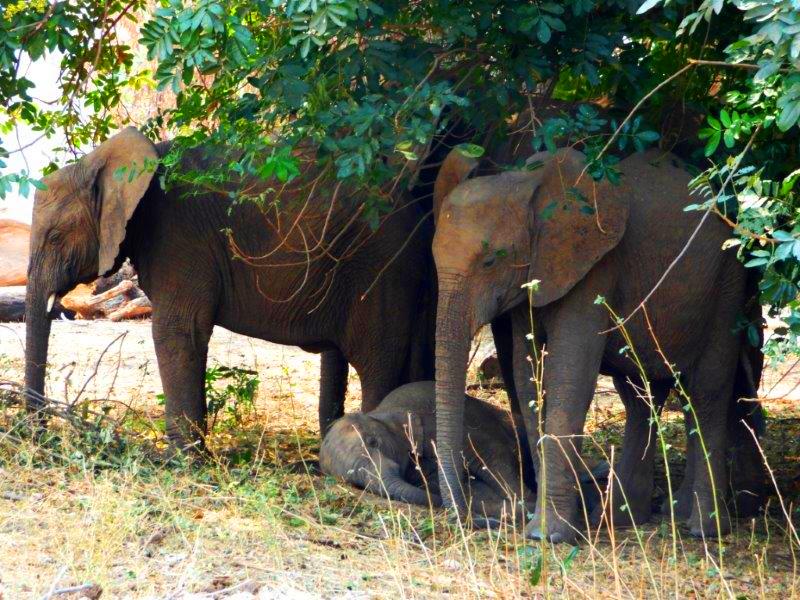
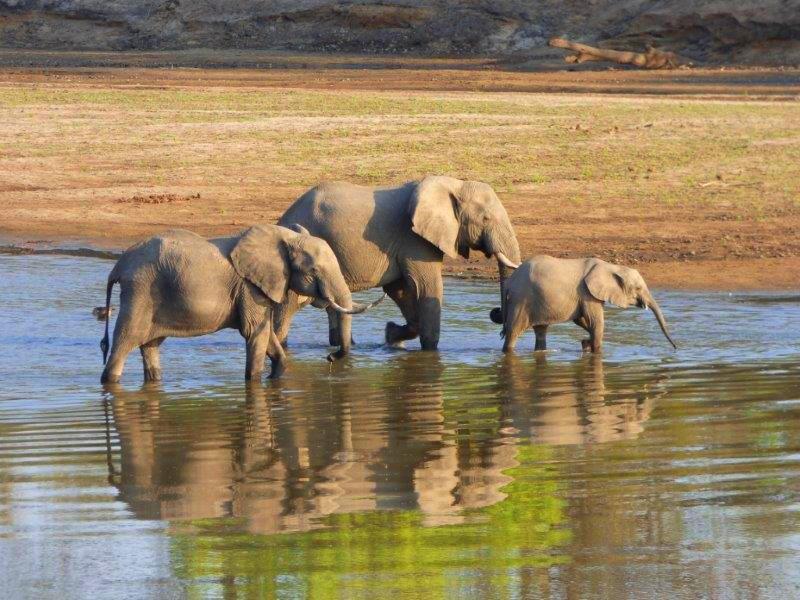
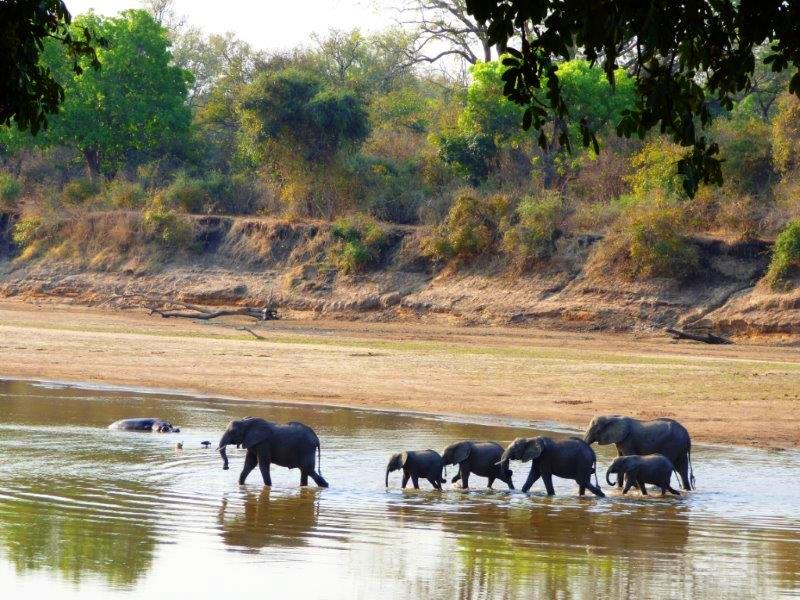
The hammock, attached to a huge knotted tree, is also a great viewing point to see the eles swish across the river. A couple days ago, one family dubbed ‘the naughty family’, climbed the bank up to the lodge and had an afternoon rest under some shady trees about fifteen metres from me. For about a half hour I watched them fan their bodies with their big butterfly ears while the youngest calf in the family sprawled out on the ground between them and went to sleep. Clearly the elephant mothers in these parts consider Marula Lodge a safe haven, because I’ve even seen babies suckling on their mums right in front of the restaurant while people sip on cold beers and cheers to how lucky they are to be witness to such tenderness.
The elephant visits are usually around midday and then again in the evening at various times. My favourite time to catch up on writing is after the sun has set and the air starts to cool. While I ponder and punch keys, bush buck and puku tip toe on by, and then come the grey ghosts, blending into the darkness.
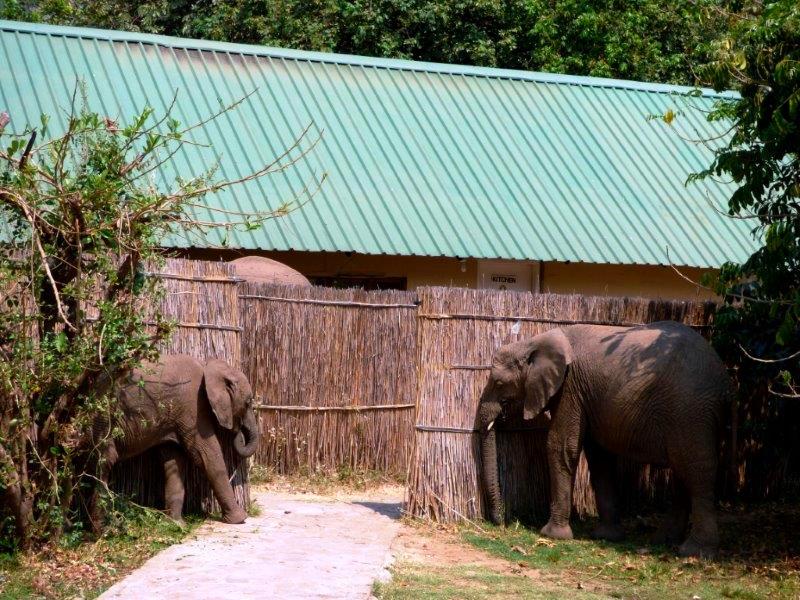
“There’s an elephant in the kitchen!” I heard a new guest exclaim a couple nights ago while I was writing a story for World Rhino Day. She was concerned for her friend that was inside the kitchen cooking up some two minute noodles.
“Nothing to worry about,” I replied. “These are very friendly elephants. Your dinner is safe, and your friend too. Just stay calm and don’t move.” And the ‘stay calm, don’t move – and don’t ever feed the animals’ rule is very much part of the welcome speech for all guests staying at Marula.
One of the larger elephants had walked into the kitchen enclave, but her shoulders were far too wide for her to get anything but her trunk through the door. However I could imagine a baby ele squeezing through the door space, but the little ones aren’t that brave and they tend to stay on the periphery.
This last week has been a very special time for me. There are no buildings or commerce in the wild, and it doesn’t take long for one’s eyes to adjust to the incessant beauty. I’m not very good at traditional meditation, but I do find being immersed in nature a sort of active meditation with incredible healing powers. I’ve observed guests of various backgrounds come and go, and there is a sense of stillness that creeps in the longer they’re in the bush. They stop asking for a wifi code, they say less, they smile more.
People often say they can’t afford to go on safari, but those on a tight budget just need to abandon the travel agent brochures and do some good old fashioned word of mouth homework. Experiencing the African wilderness can work out a lot cheaper than backpacking through Europe, or even Central America. I’ve never met a person that went on safari and was left untouched. We will only protect the things we love, and right now elephants need all the love in the world.
It’s impossible to forget that while I’ve been enjoying my little slice of peace and wild these past few days, right across the continent at least another 600 elephants have been butchered for their tusks. When I look at photos of carved ivory in China, I don’t see ‘art’, I see tombstones. I see great matriarchs with their faces hacked off, and I see little babies crying for their mothers. I see carnage and greed. China announced many months ago that they will ban the ivory trade, yet there is still no timeline on this.
Global March for Elephants & Rhinos is taking place on 3/4 October right across the world. Please, wherever you are, make a stand for these magnificent animals and march against corruption. Every 15 minutes another elephant is killed, every eight hours another rhino is hunted and hacked. We can beat extinction, but only if a lot more people join the movement. These vile king-pins and criminals are gambling on extinction, and what we stand to lose is priceless.
Jamie Joseph is currently based across various locations in Africa on a 14 week mission ‘solving poverty saves wildlife’. Follow the journey on Facebook and Twitter.
All photos copyright of Saving the Wild.